
Clay County Death Certificate Records
Clay County death records are kept by the Register of Deeds office in Hayesville, North Carolina. The office holds death certificates for events that took place in Clay County. Staff can help you find the right record and walk you through the steps to get a copy. Clay County is a small, close-knit area in the far west of the state. The Register of Deeds also handles deeds and other vital records. If you need a Clay County death record, the office is your first stop. You can visit in person or use their online tools to place an order.
Clay County Register of Deeds
The Clay County Register of Deeds is the main source for death records in the county. This office records deeds and stores vital records for Clay County. Staff can look up death certificates and help you get the copy you need. The office only issues copies for events that took place in Clay County. If a death did not happen here, you will need to contact the county where it took place.
You must bring a valid ID when you ask for a death record. The staff will check your ID before they process your request. This is a rule set by North Carolina law. A certified copy of a Clay County death record costs $10. Each certified copy has a raised seal to show it is an official document.
Visit the Clay County Register of Deeds website to learn more about the office and its services.
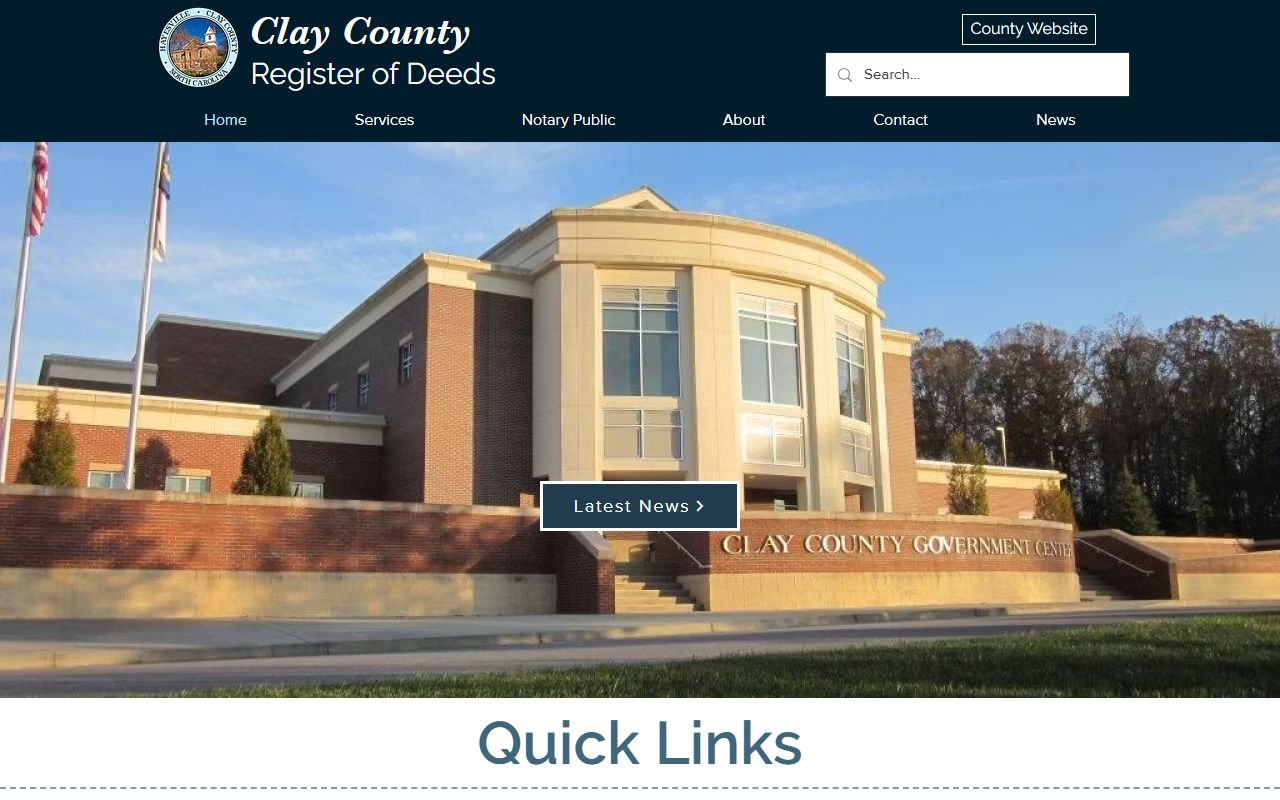
This page shows the main site for the Clay County Register of Deeds with links to vital records and other services.
| Office |
Clay County Register of Deeds Hayesville, NC |
|---|---|
| Fee | Certified Death Certificate: $10.00 |
| Website | deeds.claync.us |
Clay County Death Records Requests
To get a Clay County death record, you can visit the office or place an order online. In person, bring your ID and tell the staff the name of the deceased and the date of death. They will search their files and let you know if the record is on hand. Payment is due at the time of the request.
The Clay County Register of Deeds has a page on its site with full details about vital records. This page lists what you need to bring and what forms to fill out. It also tells you how long the process takes. Most requests are handled the same day if you visit in person.
View the Clay County vital records page for more on the steps and forms.
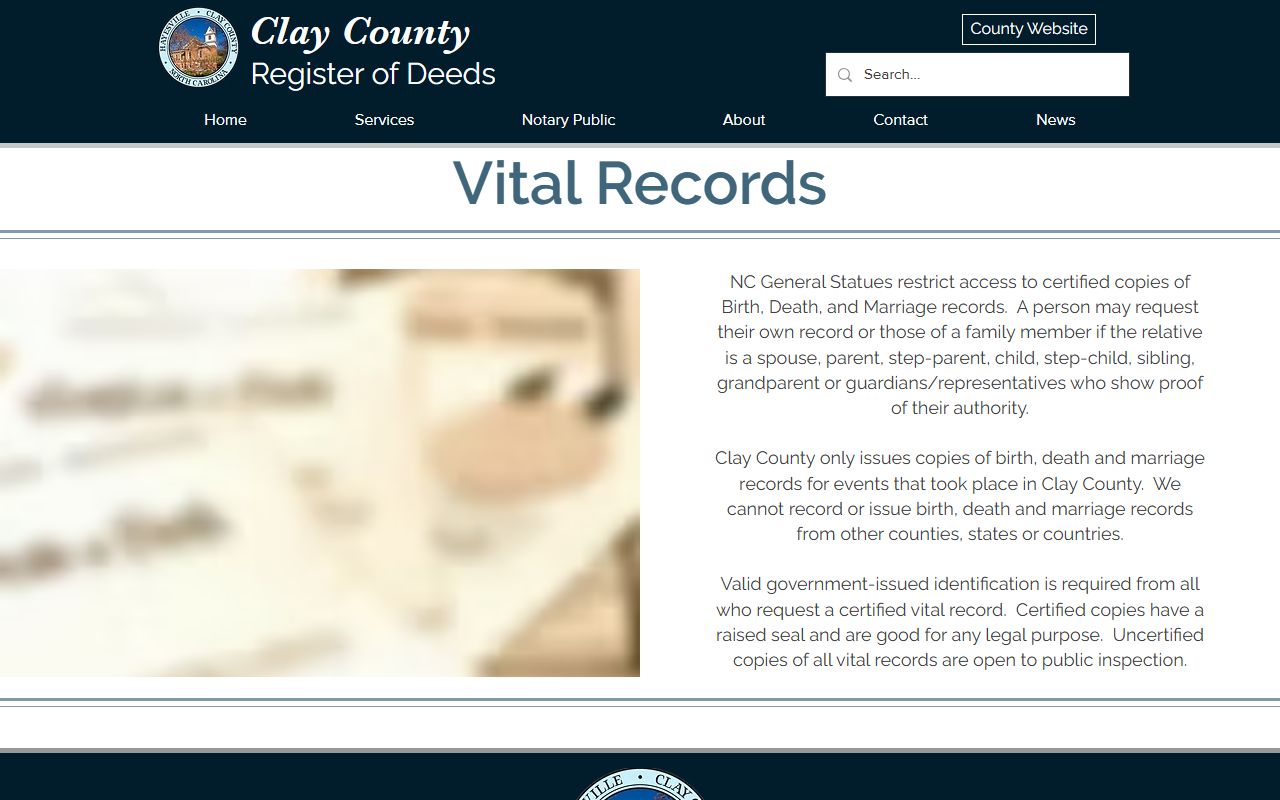
The vital records page on the Clay County site explains what you need to request a death certificate.
Note: The office only issues copies for deaths that happened in Clay County. For events in other counties, reach out to that county's Register of Deeds.
Online Clay County Death Certificate Orders
Clay County offers an online way to request death records through NCVitals. This tool lets you place an order from home. You do not need to visit the office in person. The site walks you through each step. You will need to provide the name of the deceased, the date of death, and your own ID details.
NCVitals is a service used by several North Carolina counties. It makes the process fast and simple. You can pay with a card. The office will mail the certified copy to the address you give. This is a good choice if you live far from Clay County or cannot visit during office hours.
Learn about NCVitals ordering for Clay County on the Register of Deeds site.
This section of the Clay County site shows how to use NCVitals to order death records from home.
Who Can Get Clay County Death Records
North Carolina law sets rules on who can get a certified death certificate. Not everyone can request one. The law lists those who have the right to a certified copy. This applies in Clay County and across the state.
People who can request a certified Clay County death record include:
- The spouse of the deceased
- A parent or child of the person who died
- A legal guardian or personal representative
- An attorney who acts for an eligible party
- A funeral director tied to the case
Under G.S. 130A-93.1, you must show a valid photo ID to get a certified death record from Clay County. If you do not qualify, you may still get a non-certified copy. Non-certified copies are fine for family history research or personal use.
State Vital Records and Clay County
The North Carolina Division of Public Health manages vital records at the state level. The state keeps copies of death certificates from all 100 counties. If you cannot find a death record at the Clay County office, the state may have it on file.
You can reach the state office through vitalrecords.nc.gov. The state lets you order by mail or in person. Fees at the state level may differ from Clay County. The North Carolina State Archives also holds older records. If you need a Clay County death record from many decades ago, the archives may help.
Note: The state office and the Clay County office each have their own forms and timelines. Check both to see which is faster for your needs.
Clay County Death Record Corrections
Errors on a death certificate can be fixed. If a name is wrong or a date is off, you can ask for a correction. The Clay County Register of Deeds can help you start this process. Small errors may just need a form and proof of the right facts. Larger changes may need a court order.
The rules for amending death records in North Carolina come from G.S. 130A Article 4. There is a fee for most corrections. Call the Clay County office to ask about the steps and cost for your case.
Death Record Research in Clay County
Clay County death records are a strong resource for family history work. Death certificates list the name, age, and place of death. They also show the parents of the person who died. This data is key for building family trees and checking facts about past generations.
Researchers can visit the Clay County Register of Deeds to search for records. The North Carolina Association of Registers of Deeds has a directory of all county offices if you need to check other areas. Older Clay County death records may also be on file at the State Archives in Raleigh.
Non-certified copies work best for genealogy. They cost less and still have all the key facts from the Clay County death record. Ask the staff about what is on hand for the time frame you need.
Note: Some very old records may not be at the county level. The State Archives is your best bet for records that date back many decades.