
Graham County Death Records
Graham County death records are kept at the local Register of Deeds office in Robbinsville. The county has birth and death records going back to 1913, when the state began formal registration. Graham County is one of the smallest counties in North Carolina, formed in January 1872 from Cherokee County. Staff at the office can help you find the death record you need and walk you through the request process. This page covers how to get Graham County death records, what fees to expect, and where to look for older records.
Graham County Death Records at the Register of Deeds
The Graham County Register of Deeds handles all vital records for the county. The office is at 12 North Main St., Robbinsville, NC 28771. You can call them at (828) 479-7971. Walk-in visits are the fastest way to get a death certificate from Graham County. Bring your ID and the name of the person whose record you need. Staff will search the files and let you know what is on hand.
Mail requests are also an option. Send a letter with the full name of the deceased, the date of death, and your relationship to that person. Include a check or money order for the fee. The Graham County office will mail the copy back to you once the request is processed.
The North Carolina Vital Records office in Raleigh is a good backup. They hold statewide death records and can fill requests if the Graham County office does not have what you need.
Note: Graham County death records only cover deaths that took place within county lines.
Graham County and Cherokee Heritage
A portion of Graham County lies within Cherokee land. The Eastern Band of Cherokee Indians has a long history in this part of North Carolina. If you are looking for death records tied to the Cherokee community, the Cherokee Qualla Public Library is a key resource for genealogy. The library holds records and guides that can help trace family lines in the area.
The connection between Graham County and Cherokee County runs deep. Graham was carved from Cherokee in 1872. Some older records from the area may still be filed under Cherokee County. Check both when searching for Graham County death records from the early years.
The North Carolina State Archives also holds court records from 1873 to 1908, land records from 1789 to 1921, marriage records from 1873 to 1926, and probate records from 1847 to 1930 for the Graham County area. These can be helpful for piecing together family history when a death certificate is not on file.
Who Can Get Graham County Death Certificates
North Carolina law controls who can receive a certified death certificate. The rules come from G.S. 130A-93. They apply in Graham County and every other county in the state. Only certain people may get a certified copy.
Eligible people include:
- The spouse of the deceased person
- A parent or adult child of the deceased
- A sibling of the person who died
- A legal guardian or court-appointed representative
- An attorney acting on behalf of an eligible party
If you do not fall into one of these groups, you can still view uncertified records. Uncertified copies show the same data but lack the official seal. They work well for genealogy and personal research into Graham County death records. Under G.S. 130A-26A, it is a crime to lie on a vital records request form. Be honest about your relationship to the deceased and your reason for the request.
Historical Death Records in Graham County
Graham County has death records on file from 1913 forward. For deaths before that year, the county office will not have a record. You will need to turn to other sources.
Church records are a strong starting point. Many churches in Graham County kept their own logs of births, deaths, and burials long before the state required it. Family bibles are another option. Written notes inside a family bible often include death dates and burial locations that you cannot find in any government file.
Cemetery records can also help. Small family cemeteries are common in the mountains of western North Carolina. Walking a cemetery and reading headstones can give you dates and family connections. Local historical groups in Graham County may have maps or lists of these burial sites.
The State Archives holds records that stretch back further than the county office files. Land records going back to 1789 and probate records from 1847 may hold clues about death dates in Graham County. Cross-referencing these with other sources can help build a clearer picture.
Note: Records from before 1872 may be filed under Cherokee County, since Graham County did not exist until that year.
Graham County Death Record Fees
A certified death certificate from Graham County costs $10. This is the standard rate set by state law. Each extra copy of the same record costs less. Ask the office for the exact price on additional copies.
Uncertified copies cost less than certified ones. The Graham County Register of Deeds can tell you the current rate when you call or visit. Uncertified copies work for personal use but not for legal matters like settling an estate or filing an insurance claim.
The NC Vital Records fee schedule lists the standard rates for all vital records in the state. Graham County follows these rates for death certificates and other documents.
North Carolina Vital Records Resources
The state vital records office provides online tools that can help with Graham County death record searches. The NC Vital Records ordering page allows you to submit requests from home. This is useful if you live far from Robbinsville or cannot visit during business hours.
The state office maintains an online portal for ordering vital records, shown below.
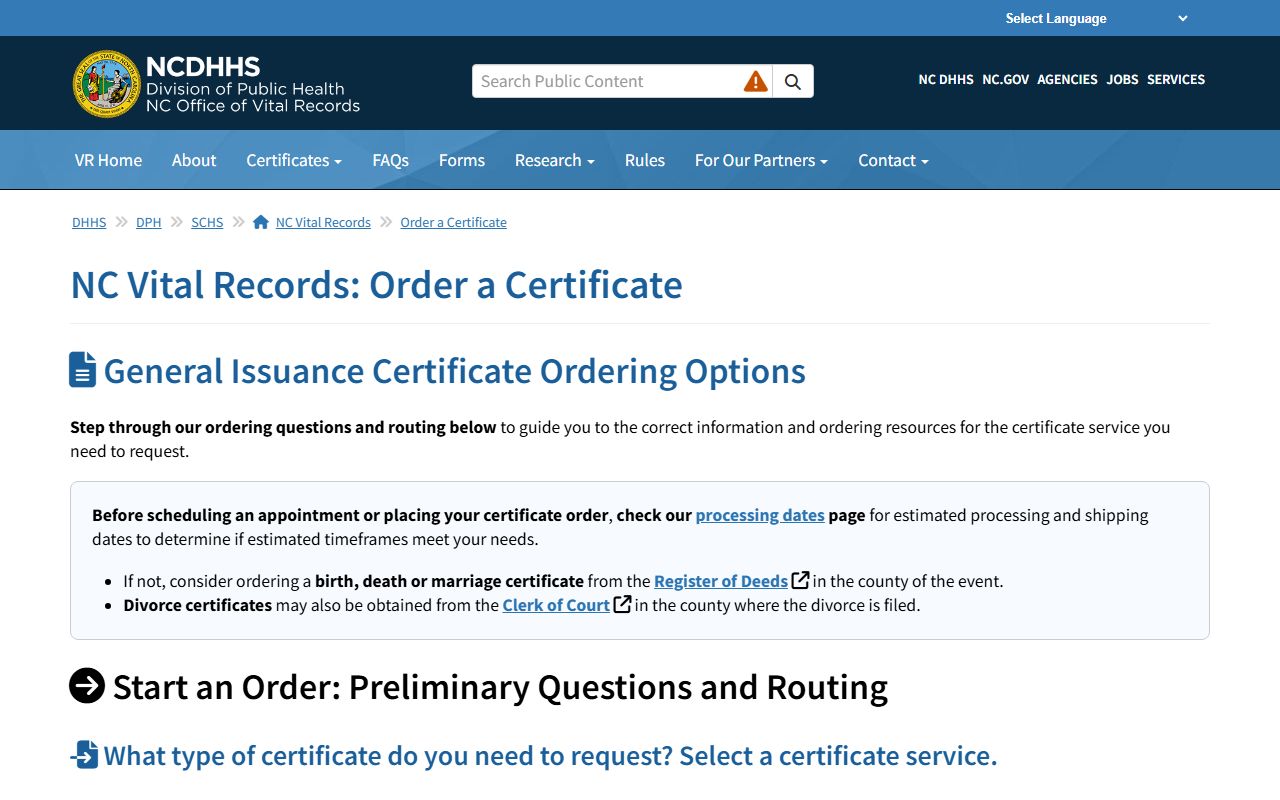
This portal covers all counties, including Graham County. You will need to know the full name and date of death to start your search.
Under G.S. 130A Article 4, the state sets the rules for how vital records are filed, stored, and shared. The Graham County Register of Deeds follows these rules for every death certificate request. The law also covers amendments to records. If you find an error on a Graham County death certificate, you can request a correction through the proper channels.
Tips for Searching Graham County Death Records
Start with the basics. Know the full name of the person and an approximate date of death. This speeds up the search at the Graham County office.
Try name variants. Older Graham County records may use different spellings or shortened versions of names. A woman may be listed under her maiden name or a married name. Try all options when you search.
Under G.S. 130A-93.1, certain older vital records become public after a set time. Ask the Graham County office or the state about access to older death records that may have moved to open status. These records can be viewed by anyone without proving a relationship to the deceased.
If the county office cannot help, try the NC Association of Registers of Deeds directory. It lists every county office in the state. You can use it to find the right contact if the death happened outside of Graham County.
For genealogy forms and applications, the NC Vital Records forms page has what you need. Download and fill out the right form before you visit or mail your request to Graham County.