
Wake County Death Records Access
Wake County death records are available through the Register of Deeds, who serves as the custodian of public records for the county. The office stores death certificates for events that took place in Wake County. You can visit the main office in Raleigh, use one of several regional centers, or order online through Permitium. This page covers how to find and request Wake County death records through each of these channels.
Wake County Register of Deeds
The Wake County Register of Deeds is the custodian of public records for the county. The main office is at the Wake County Justice Center, 300 S. Salisbury Street, Suite 1700, Raleigh, NC 27601. You can call at 919-856-5460. The mailing address is PO Box 1897, Raleigh, NC 27602-1897. Hours are Monday through Friday, 8:30 AM to 5:00 PM.
Wake County also has regional centers where you can request death records. The Eastern Regional Center is in Zebulon. The Northern Regional Center is in Wake Forest. The Southern Regional Center is in Fuquay-Varina. These centers offer the same vital records services as the main office in Raleigh. If you live closer to one of these towns, it may be easier to visit a regional center for your Wake County death record.
Visit the Wake County Register of Deeds website for full office details and links to online tools.
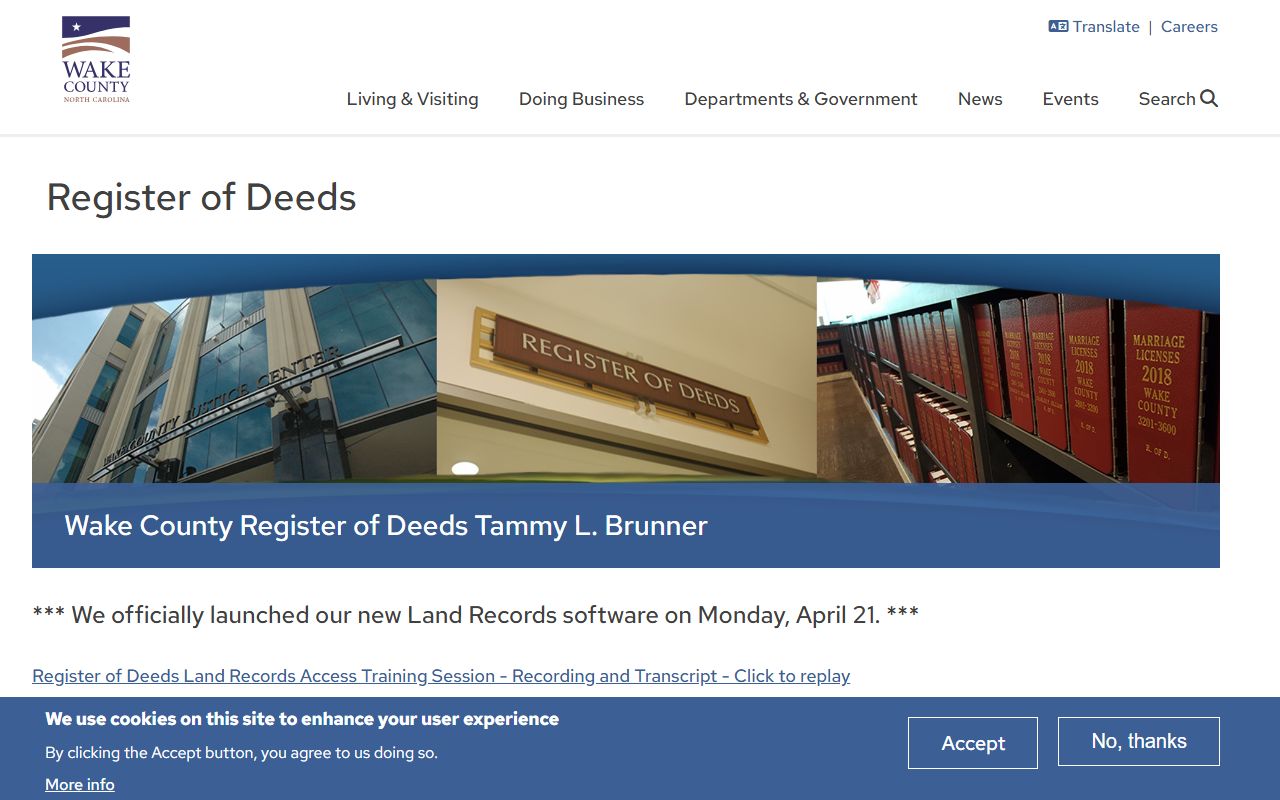
The website has contact details, hours, and links to all of the services the office provides.
Online Wake County Death Records
Wake County accepts online orders for death records through Permitium. This is a fast way to request a copy without visiting the office. The system walks you through each step, from picking the record type to entering details and paying by card.
Visit the Wake County online vital records portal to start your order.
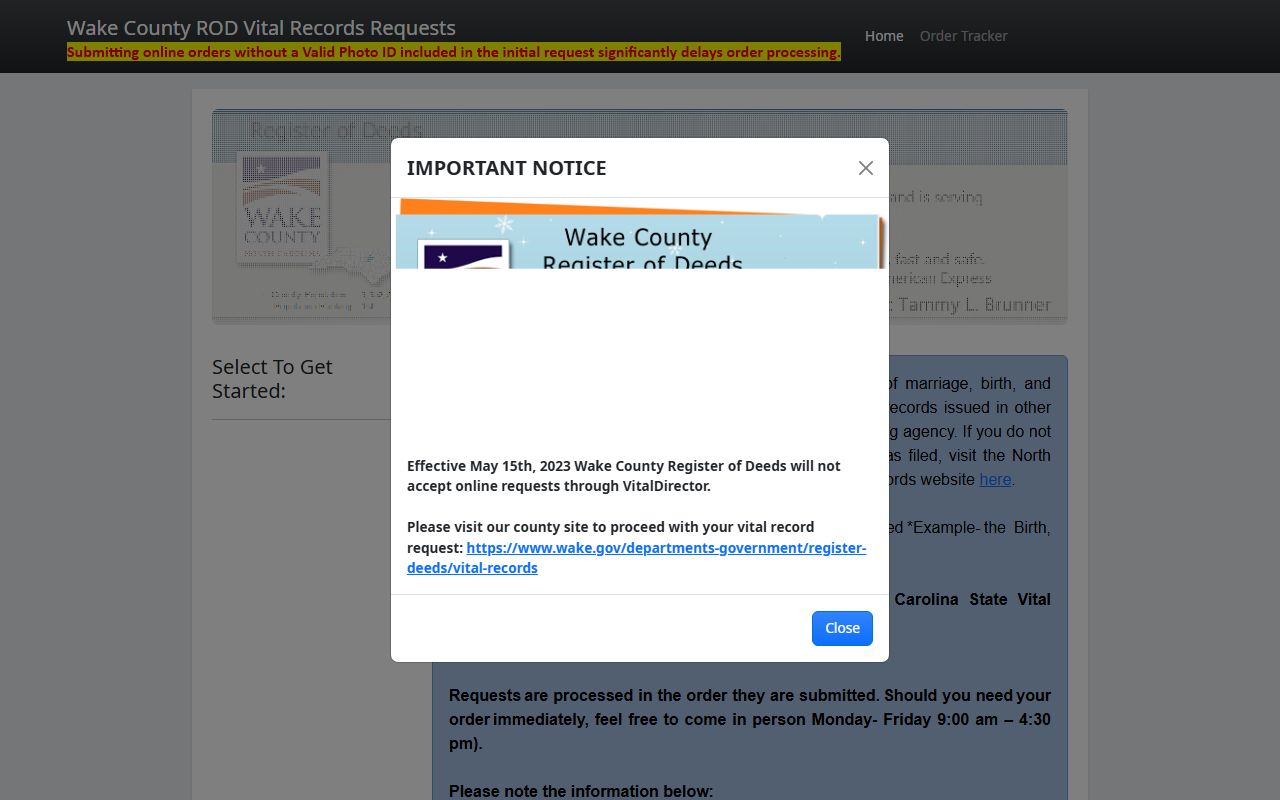
The portal lets you order death records, birth records, and marriage records for Wake County events.
A certified copy costs $10. Online orders add a $3 convenience fee and a $0.35 Vital Verify fee. These extra charges cover the cost of the online system. Orders placed online are mailed to you and take about 10 to 14 days to arrive. If you need a copy faster, visit the office in person for same-day service.
Note: The Wake County office can only provide records for events that took place in Wake County. If the death happened in another county, contact that county's Register of Deeds.
In-Person Wake County Death Requests
In-person visits to the Wake County Register of Deeds are the fastest way to get a death record. You can walk into the main office in Raleigh or any of the regional centers. Bring a valid photo ID and the name and date of death of the person whose record you need. If the record is on file, you can get a same-day copy.
The staff will check your ID and ask about your link to the deceased. Under G.S. 130A-93, only certain people can get a certified death certificate. If you qualify, the staff will process your request on the spot. If you do not qualify, you can still get a non-certified copy of the Wake County death record.
By mail, send your request to PO Box 1897, Raleigh, NC 27602-1897. Include the name of the deceased, the date of death, your link to the person, a copy of your ID, and a check or money order for the fee.
Wake County Death Certificate Fees
A certified copy of a Wake County death certificate costs $10. This is the standard state rate. Online orders add a $3 convenience fee and a $0.35 Vital Verify fee to the total. Non-certified copies cost less. Call the office at 919-856-5460 for the current non-certified rate.
The NC Vital Records fee schedule lists all rates for death records and other vital documents. Wake County follows the state schedule for all of its vital records fees.
Who Can Get Wake County Death Records
North Carolina law limits who can get a certified death certificate. Under G.S. 130A-93, only people with a direct link to the deceased may get a certified copy. This applies in Wake County the same as in all other counties.
Eligible people include:
- The surviving spouse
- A parent or adult child of the deceased
- A sibling
- A legal representative with court papers
- An attorney acting for an eligible party
- A funeral director who handled the case
Non-certified copies are open to the public. They show the same facts but do not have the raised seal. Under G.S. 130A-26A, it is a felony to provide false information to get a vital record. This law applies to all requests for Wake County death records.
Historical Wake County Death Records
Death records at the Wake County Register of Deeds start from 1913. This is when the state began formal vital records registration. For deaths before 1913, the county office will not have a certificate. Older records may exist in church files, cemetery logs, or family papers from the Wake County area.
The North Carolina State Archives is in Raleigh, the Wake County seat. The archives hold court records, estate files, wills, and other documents from across the state. For Wake County, the archives may have records that go back to the 1700s. This is a strong resource for anyone doing family history research in the area.
Raleigh has been the state capital since 1792. Wake County has a long and well-documented history. The volume of records from the 1900s onward is large because of the county's population growth. The Register of Deeds stores all of these records and can help you search through them.
Note: Under G.S. 130A-93.1, some older vital records become open to the public after a set number of years. Ask the Wake County staff if the record you need has reached public status.
State Resources for Wake County Deaths
The North Carolina Vital Records office keeps death records from all 100 counties. Since the state office is also in Raleigh, it is easy to visit both the Wake County office and the state office in the same trip if needed. You can order from the state ordering page or by mail.
Under G.S. 130A Article 4, the state governs how vital records are created, filed, and shared. Wake County follows these rules for every death certificate it holds. The NC Association of Registers of Deeds has a full list of county offices if the death took place outside Wake County.